How To Understand The Bible
Many sincere Bible readers eventually encounter difficult questions:
- Why are some commands in the Bible no longer practiced today?
- Why did Jesus focus primarily on Israel during His earthly ministry?
- Why do some promises seem different from what Christians experience now?
- How do the Old Testament, the Gospels, and Paul’s letters fit together?
These questions often arise because the Bible spans thousands of years of history and records different ways God interacted with people at different times. One key to understanding Scripture is learning to recognize those distinctions.
God Calls Us to Be Explorers of Scripture
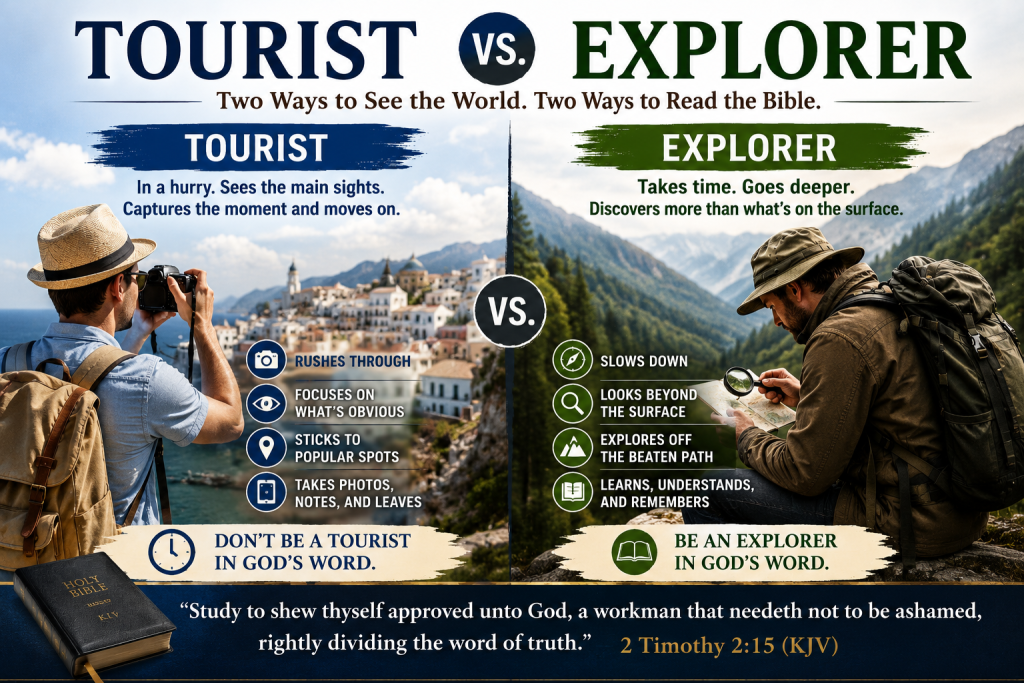
There is a difference between a tourist and an explorer.
A tourist moves quickly, stopping only at the obvious attractions. An explorer slows down, studies carefully, and searches deeply for understanding. You might even call an explorer a “student.”
Too often, people approach the Bible like tourists—reading isolated verses without understanding the larger framework surrounding them. But Scripture invites us to explore deeply and discover how God’s plan unfolds throughout history.
One foundational principle is this: All the Bible is written for us, but not every part is written directly to us or about us.
Understanding that principle can transform the way you read the Bible.
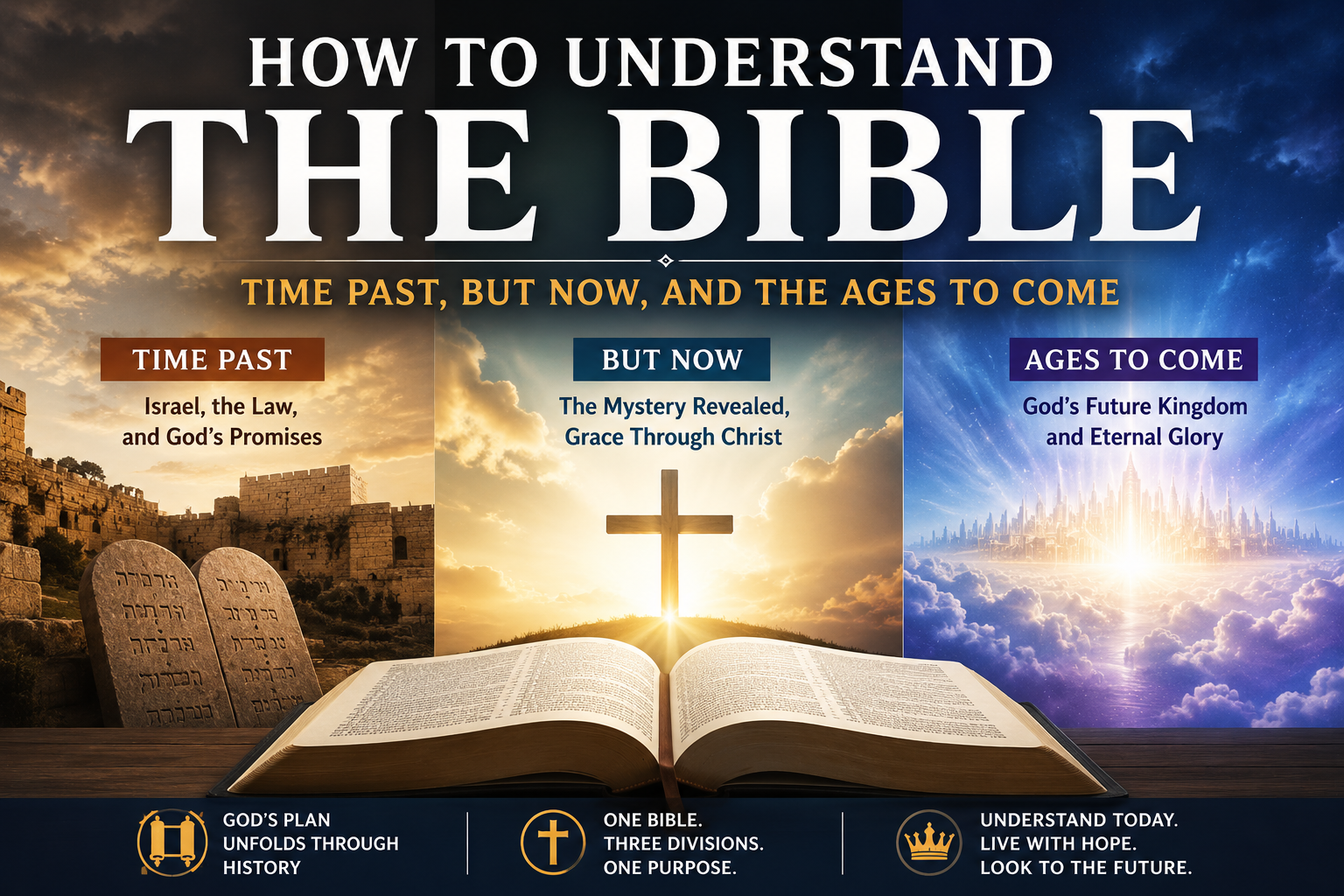
The Great Divide in the Bible: Understanding “Time Past,” “But Now,” and “The Ages to Come”
The book of Ephesians identifies three major periods:
- Time Past — Ephesians 2:11–12
- But Now — Ephesians 2:13–16
- Ages to Come — Ephesians 2:7
1. Time Past: Israel and the Nations
Wherefore remember, that ye being in time past Gentiles in the flesh, who are called Uncircumcision by that which is called the Circumcision in the flesh made by hands; That at that time ye were without Christ, being aliens from the commonwealth of Israel, and strangers from the covenants of promise, having no hope, and without God in the world:
Ephesians 2:11-12
These divisions help explain how God’s revelation unfolded progressively throughout Scripture.
The “Time Past” period is characterized by a distinction between Israel and the Gentile nations. Circumcision served as the sign of that separation.
Abraham and the Beginning of a Nation
God called Abraham out from among the nations and made specific promises to him:
- A great nation
- A land inheritance
- A covenant relationship with God
In Genesis 17, circumcision became the sign of that covenant, marking Israel as distinct from the Gentile world.
Moses and the Law
Under Moses, God gave Israel the Law and called them to be a “kingdom of priests.”
The prophets foretold a future earthly kingdom where:
- Israel would be restored
- The nations would be blessed through Israel
- God’s rule would be established on earth
David and the Kingdom Promise
God later promised David an everlasting throne and kingdom connected to Israel.
Throughout the Old Testament, the prophets continued pointing toward this coming kingdom and the events leading up to it.
Salvation Has Always Been by Faith
One of the most important truths in Scripture is that salvation has always been by faith. However, people trusted God based on the revelation He had given them at that time.
Examples include:
- Abel bringing the proper sacrifice
- Noah building the ark
- Abraham believing God’s promises
- David trusting in God’s mercy
The document emphasizes that believers in earlier periods did not possess the same understanding of Christ’s death and resurrection that was later revealed more fully.
Jesus’ Earthly Ministry and Israel
During His earthly ministry, Jesus ministered primarily to Israel within this prophetic kingdom framework.
The message proclaimed by:
- John the Baptist
- Jesus Himself
- The twelve apostles
was centered on repentance and the nearness of the kingdom.
The early chapters of Acts continue this kingdom-focused message directed toward Israel.
This raises an important question:
If the distinction between Israel and the Gentiles still existed during the Gospels and early Acts, when does the transition occur?
2. “But Now”: The Revelation of the Mystery
The next major division appears in Ephesians 3, where Paul describes a revelation called “the mystery.”
But now in Christ Jesus ye who sometimes were far off are made nigh by the blood of Christ. For he is our peace, who hath made both one, and hath broken down the middle wall of partition between us; Having abolished in his flesh the enmity, even the law of commandments contained in ordinances; for to make in himself of twain one new man, so making peace; And that he might reconcile both unto God in one body by the cross, having slain the enmity thereby:
Ephesians 2:13-16
What Is the Mystery?
According to the document, the mystery refers to truths previously hidden but later revealed through the apostle Paul.
This includes:
- A dispensation centered on grace
- The preaching of Christ’s death, burial, and resurrection
- Salvation offered freely apart from Israel’s covenant system
The central gospel message is summarized in 1 Corinthians 15:3–4.
Paul’s Unique Ministry
The outline presents Paul as the pattern for believers living in this present dispensation of grace.
Romans 11 is used to explain Israel’s temporary setting aside and the opening of salvation to the Gentile world in a new way.
3. The Ages to Come
The final period mentioned is “the ages to come.”
That in the ages to come he might shew the exceeding riches of his grace in his kindness toward us through Christ Jesus.
Ephesians 2:7
This points forward to the future fulfillment of God’s purposes and the complete glorification of Christ.
Prophecy and Mystery: A Critical Distinction
The article concludes by emphasizing what it considers one of the most important divisions in Bible study: the distinction between prophecy and mystery.
Prophecy
Prophecy concerns:
- God’s earthly kingdom program
- Promises spoken since the world began
- Israel’s prophetic future
Mystery
The mystery concerns:
- Truths hidden in previous ages
- God’s heavenly purpose in Christ
- Revelation given through Paul
Why This Matters for Bible Study Today
Understanding these distinctions can help explain many difficult questions Christians wrestle with today:
- Why certain sign gifts are no longer seen
- Why some promises were connected specifically to Israel
- Why different parts of Scripture contain different instructions
- How the Bible fits together without contradiction
Rather than forcing verses together or explaining away apparent tensions, this approach encourages readers to study each passage in its proper context.
Becoming Better Students of Scripture
The Bible is not a random collection of disconnected books. It is a unified revelation that unfolds progressively through history.
As believers learn to recognize the distinctions within Scripture, they often gain:
- Greater clarity in Bible study
- A deeper understanding of God’s plan
- More confidence in interpreting difficult passages
- A stronger appreciation for the unity of God’s Word
God did not intend for His people to remain surface-level readers of Scripture. He calls us to become explorers—carefully studying His Word so we can better understand His truth and grow in our faith.